Buy bräunungsstudio.com ?
We are moving the project
bräunungsstudio.com .
Are you interested in purchasing the domain
bräunungsstudio.com ?
domain@kv-gmbh.de · 0541-91531010
Buy bräunungsstudio.com ?
How do non-homologous recombination and homologous recombination work?
Non-homologous recombination involves the joining of two DNA molecules at non-homologous sequences, resulting in the insertion, deletion, or rearrangement of genetic material. This process is often error-prone and can lead to mutations. Homologous recombination, on the other hand, involves the exchange of genetic material between two similar DNA molecules, typically occurring during meiosis. This process is important for repairing DNA damage and ensuring genetic diversity. It involves the exchange of genetic material between homologous chromosomes, resulting in the formation of new combinations of genes. **
Are modifications homologous?
Modifications can be homologous if they are derived from a common ancestral modification and have similar functions in different species. For example, the presence of similar modifications in the wings of bats and birds, both of which enable flight, suggests homology. However, modifications can also be analogous, meaning they have similar functions but are not derived from a common ancestor. An example of analogous modifications is the wings of birds and insects, which have different evolutionary origins but serve the same function of flight. **

Similar search terms for Homologous
Top-Angebote
Products related to Homologous:
-
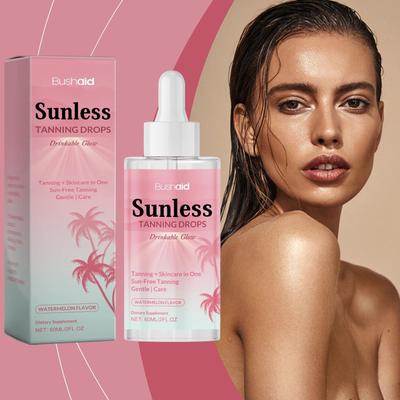
Pestle & Mortar Glow Drops - Customisable Tanning Drops 30mlCustomise your tan with these tanning concentrated drops enriched with hyaluronic acid. The drops deliver a natural sun-kissed glow as dark or light as you would like your tan to go. The drops are formulated without alcohol, colour or fragrance so that you can achieve the tan you love without drying your skin out. Ingredients Aqua, Ascorbyl Glucoside, 3-O-Ethyl-L-Ascorbic Acid, Sodium Ascorbyl Phosphate, Pentylene Glycol, Glycerin, Lactobacillus/Pumpkin Fruit Ferment Filtrate, Ferulic Acid, Tamarindus indica Seed Polysaccharide, Xanthan Gum, Sodium Ascorbate, Sorbitol, Sodium Hydroxide, Citric Acid, Ethylhexylglycerin, Tetrasodium Iminodi- succinate, Sodium Hyaluronate Crosspolymer, Lecithin, Leuconostoc/Radish Root Ferment Filtrate, Hydroxyacetophenone, Sodium Benzoate, Sodium Chloride, Glucose, Potassium Sorbate, CI 75120 [Annatto], Phenoxyethanol. Oil Phase: Oenothera Biennis (Evening Primrose) Oil, Squalane, Linoleic Acid, Isopropyl Lauroyl Sarcosinate, Tocopherol, Linolenic Acid.35,00 £*Shipping: 0,00 £Secure redirect to the provider
-
Beautiful Skin Island Glow Easy Tanning Drops - Tan To Deep Charlotte Tilbury 1017 Beautiful Skin Island Glow Easy Tanning Drops Size:Darlings, discover my NEW! Beautiful Skin Island Glow Easy Tanning Drops, my FIRST-EVER SELF-TANNING INNOVATION! Infused with radiance-boosting, skin-plumping, hydrating skincare ingredients, plus clinically proven TAN-ENHANCING MOLECULES for that IBIZA-INSPIRED, lit-from-within ISLAND GLOW + FEELING! Reflecting how different skin tones behave in the sun, I have expertly formulated two shades so my tanning drops are suitable for all skin tones: Choose38,00 £*Shipping: 2,95 £Secure redirect to the provider
-
Uplift Essentials Natural Glow Tanning Drops Nourishing Brown Face & Body Tinting Serum Natural Glow Tanning Drops Nourishing Brown Face & Body Tinting SerumAchieve a customized, sunkissed radiance with these highperformance Tanning Drops. Designed as a versatile tinting serum, this formula allows you to control your tan by simply mixing a few drops into your favorite moisturizer. Whether you are...57,97 $*Shipping: 0,00 $Secure redirect to the provider
-
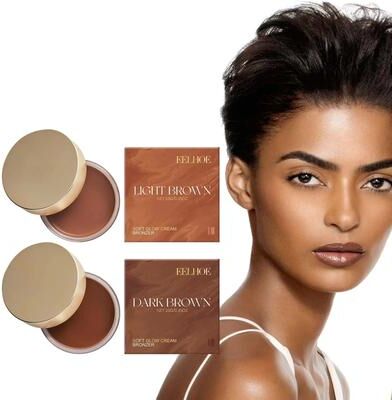
Uplift Essentials Deep Bronze Tanning Gel Intensive Sunless Body Bronzer & Summer Glow Treatment dark BrownAchieve an elite, sundrenched complexion with this highperformance Brown Tanning Cream. Engineered as a professionalgrade self tanning solution, this black cream formula is designed for those who demand a deep, mahogany finish without the long hours...44,97 $*Shipping: 0,00 $Secure redirect to the provider


-
Why are bird feathers homologous?
Bird feathers are homologous because they all share a common evolutionary origin. They are derived from the same structure in the common ancestor of all birds. Despite the variations in size, shape, and color, bird feathers all serve the same fundamental purpose of providing insulation, aiding in flight, and attracting mates. This shared ancestry and function make bird feathers homologous structures. **
-
Can non-homologous chromosomes cross over?
No, non-homologous chromosomes cannot undergo crossing over during meiosis. Crossing over is a process that involves the exchange of genetic material between homologous chromosomes, which are chromosomes that are similar in size, shape, and gene content. Non-homologous chromosomes do not have the necessary similarity in order to undergo crossing over. **
-
Are Maybugs analogous or homologous animals?
Maybugs, also known as cockchafers, are not analogous or homologous to any other animals. They are a unique species of beetle belonging to the family Scarabaeidae. Analogous structures are similar in function but not in structure or evolutionary origin, while homologous structures are similar in structure and evolutionary origin but not necessarily in function. Maybugs do not share these similarities with any other animals, making them a distinct and separate species. **
-
Are bat wings homologous or analogous?
Bat wings are homologous structures, meaning they share a common evolutionary origin with the wings of other mammals, such as humans and whales. This suggests that bats, humans, and whales all inherited their limb structure from a common ancestor. In contrast, analogous structures are those that have similar functions but different evolutionary origins, such as the wings of birds and insects. **
Which homologous organs exist in plants?
Homologous organs in plants are structures that have a common evolutionary origin but may have different functions. Examples of homologous organs in plants include the various types of leaves, such as simple leaves, compound leaves, and scale leaves, which all have a common origin but serve different functions in different plant species. Another example is the different types of flowers, which have a common origin but may have evolved to attract different pollinators or serve different reproductive strategies. Additionally, the various types of stems, such as rhizomes, stolons, and tubers, are also considered homologous organs in plants. **
What are the homologous series of alkanes?
The homologous series of alkanes are a group of organic compounds that share a similar structure and chemical properties. They are characterized by having single bonds between carbon atoms and the general formula CnH2n+2, where n represents the number of carbon atoms in the molecule. Examples of alkanes include methane (CH4), ethane (C2H6), propane (C3H8), butane (C4H10), and so on. As the number of carbon atoms increases, the physical properties of alkanes, such as boiling point and melting point, also change in a predictable manner. **
Top-Angebote
Products related to Homologous:
-
Uplift Essentials Sun Kissed Glow Tanning Serum Customizable Face & Body Bronzer Sun Kissed Glow Tanning Serum Customizable Face & Body BronzerAchieve a radiant, holidayready complexion with these highperformance Sunless Tanning Drops. Designed as a versatile natural tanner, this concentrated formula allows you to control your bronze by simply mixing a few drops into your favorite daily...57,97 $*Shipping: 0,00 $Secure redirect to the provider
-
The Airbrush Bronzing Kit - Bronzing Kit Charlotte Tilbury 371 The Airbrush Bronzing Kit Size:AIRBRUSH BRONZER IS MY NEW! NEXT GENERATION MATTE INNOVATION FOR THAT FLAWLESS SUMMER FEELING! Featuring my HYALURONIC ACID-INFUSED, SMOOTHING, PORE-BLURRING EFFECT MATTE bronzer for the face and body, Airbrush Bronzer and the specially-designed Kabuki-style retractable bronzer brush, The Air Brush, it's MATTE BRONZING made EASY! This magical makeup kit includes:70,55 £*Shipping: 0,00 £Secure redirect to the provider
-
Pestle & Mortar Glow Drops - Customisable Tanning Drops 30mlCustomise your tan with these tanning concentrated drops enriched with hyaluronic acid. The drops deliver a natural sun-kissed glow as dark or light as you would like your tan to go. The drops are formulated without alcohol, colour or fragrance so that you can achieve the tan you love without drying your skin out. Ingredients Aqua, Ascorbyl Glucoside, 3-O-Ethyl-L-Ascorbic Acid, Sodium Ascorbyl Phosphate, Pentylene Glycol, Glycerin, Lactobacillus/Pumpkin Fruit Ferment Filtrate, Ferulic Acid, Tamarindus indica Seed Polysaccharide, Xanthan Gum, Sodium Ascorbate, Sorbitol, Sodium Hydroxide, Citric Acid, Ethylhexylglycerin, Tetrasodium Iminodi- succinate, Sodium Hyaluronate Crosspolymer, Lecithin, Leuconostoc/Radish Root Ferment Filtrate, Hydroxyacetophenone, Sodium Benzoate, Sodium Chloride, Glucose, Potassium Sorbate, CI 75120 [Annatto], Phenoxyethanol. Oil Phase: Oenothera Biennis (Evening Primrose) Oil, Squalane, Linoleic Acid, Isopropyl Lauroyl Sarcosinate, Tocopherol, Linolenic Acid.35,00 £*Shipping: 0,00 £Secure redirect to the provider
-
Beautiful Skin Island Glow Easy Tanning Drops - Tan To Deep Charlotte Tilbury 1017 Beautiful Skin Island Glow Easy Tanning Drops Size:Darlings, discover my NEW! Beautiful Skin Island Glow Easy Tanning Drops, my FIRST-EVER SELF-TANNING INNOVATION! Infused with radiance-boosting, skin-plumping, hydrating skincare ingredients, plus clinically proven TAN-ENHANCING MOLECULES for that IBIZA-INSPIRED, lit-from-within ISLAND GLOW + FEELING! Reflecting how different skin tones behave in the sun, I have expertly formulated two shades so my tanning drops are suitable for all skin tones: Choose38,00 £*Shipping: 2,95 £Secure redirect to the provider
-
How do non-homologous recombination and homologous recombination work?
Non-homologous recombination involves the joining of two DNA molecules at non-homologous sequences, resulting in the insertion, deletion, or rearrangement of genetic material. This process is often error-prone and can lead to mutations. Homologous recombination, on the other hand, involves the exchange of genetic material between two similar DNA molecules, typically occurring during meiosis. This process is important for repairing DNA damage and ensuring genetic diversity. It involves the exchange of genetic material between homologous chromosomes, resulting in the formation of new combinations of genes. **
-
Are modifications homologous?
Modifications can be homologous if they are derived from a common ancestral modification and have similar functions in different species. For example, the presence of similar modifications in the wings of bats and birds, both of which enable flight, suggests homology. However, modifications can also be analogous, meaning they have similar functions but are not derived from a common ancestor. An example of analogous modifications is the wings of birds and insects, which have different evolutionary origins but serve the same function of flight. **
-
Why are bird feathers homologous?
Bird feathers are homologous because they all share a common evolutionary origin. They are derived from the same structure in the common ancestor of all birds. Despite the variations in size, shape, and color, bird feathers all serve the same fundamental purpose of providing insulation, aiding in flight, and attracting mates. This shared ancestry and function make bird feathers homologous structures. **
-
Can non-homologous chromosomes cross over?
No, non-homologous chromosomes cannot undergo crossing over during meiosis. Crossing over is a process that involves the exchange of genetic material between homologous chromosomes, which are chromosomes that are similar in size, shape, and gene content. Non-homologous chromosomes do not have the necessary similarity in order to undergo crossing over. **
Similar search terms for Homologous
-
Uplift Essentials Natural Glow Tanning Drops Nourishing Brown Face & Body Tinting Serum Natural Glow Tanning Drops Nourishing Brown Face & Body Tinting SerumAchieve a customized, sunkissed radiance with these highperformance Tanning Drops. Designed as a versatile tinting serum, this formula allows you to control your tan by simply mixing a few drops into your favorite moisturizer. Whether you are...57,97 $*Shipping: 0,00 $Secure redirect to the provider
-
Uplift Essentials Deep Bronze Tanning Gel Intensive Sunless Body Bronzer & Summer Glow Treatment dark BrownAchieve an elite, sundrenched complexion with this highperformance Brown Tanning Cream. Engineered as a professionalgrade self tanning solution, this black cream formula is designed for those who demand a deep, mahogany finish without the long hours...44,97 $*Shipping: 0,00 $Secure redirect to the provider
-
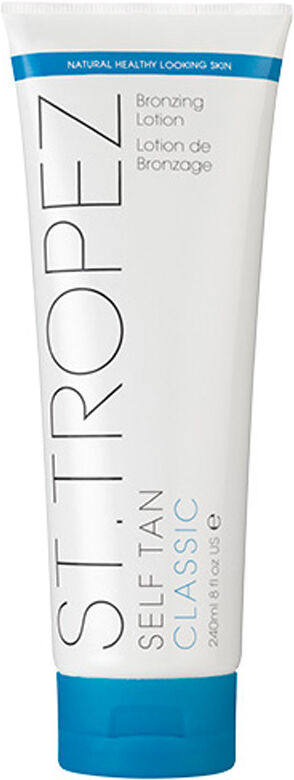
St Tropez Tan Classic Bronzing Lotion 240ml“I love a natural, sunkissed glow and St. Tropez has always been my trusted go-to for their incredible formulas.” - Ashley Graham St. Tropez Self Tan Bronzing Lotion is the original salon-inspired formulation to give you an even, rich, deep and beautiful tan. This gorgeously scented self-tanner is enriched with Vitamin E to nourish skin and create long-lasting colour. Contains Aromaguard™ Fragrance Technology to leave skin with a subtle, refreshing fragrance.20,78 £*Shipping: 0,00 £Secure redirect to the provider
-
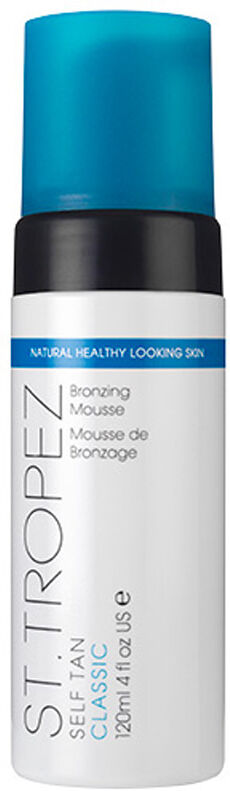
St Tropez Tan Classic Bronzing Mousse 120ml“I love a natural, sunkissed glow and St. Tropez has always been my trusted go-to for their incredible formulas.�- Ashley Graham Possibly one of the most iconic St. Tropez tans around, the St.Tropez Classic Bronzing Mousse is formulated with a hint of moisturiser to keep the skin hydrated and help your tan last longer. The quick-drying and non sticky formula will provide a natural, radiant looking tan along with a new added mood-boosting scent to help cancel out that fake-tan 'biscuit' smell! IngredientsAqua (Water), Dihydroxyacetone, PPG-5-Ceteth-20, Propylene Glycol, Glycerin, Ethoxydiglycol, Coco-Glucoside, Caramel, Phenoxyethanol, Parfum, Sodium Metabisulfite, Hydrolyzed Jojoba Esters, Hydroxyethylcellulose, Tocopherol, Decylene Glycol, Caprylyl Glycol, d-limonene, Anisyl Alcohol, Sodium Hydroxide, Linalool, Hexyl Cinnamal, Benzyl Salicylate, Citronellol, Hydroxycitronellal, Alpha-isomethyl Ionone, Coumarin, CI 14700 (Red 4), CI 19140 (Yellow 5), CI 42090 (Blue 1).22,00 £*Shipping: 2,95 £Secure redirect to the provider
-
Are Maybugs analogous or homologous animals?
Maybugs, also known as cockchafers, are not analogous or homologous to any other animals. They are a unique species of beetle belonging to the family Scarabaeidae. Analogous structures are similar in function but not in structure or evolutionary origin, while homologous structures are similar in structure and evolutionary origin but not necessarily in function. Maybugs do not share these similarities with any other animals, making them a distinct and separate species. **
-
Are bat wings homologous or analogous?
Bat wings are homologous structures, meaning they share a common evolutionary origin with the wings of other mammals, such as humans and whales. This suggests that bats, humans, and whales all inherited their limb structure from a common ancestor. In contrast, analogous structures are those that have similar functions but different evolutionary origins, such as the wings of birds and insects. **
-
Which homologous organs exist in plants?
Homologous organs in plants are structures that have a common evolutionary origin but may have different functions. Examples of homologous organs in plants include the various types of leaves, such as simple leaves, compound leaves, and scale leaves, which all have a common origin but serve different functions in different plant species. Another example is the different types of flowers, which have a common origin but may have evolved to attract different pollinators or serve different reproductive strategies. Additionally, the various types of stems, such as rhizomes, stolons, and tubers, are also considered homologous organs in plants. **
-
What are the homologous series of alkanes?
The homologous series of alkanes are a group of organic compounds that share a similar structure and chemical properties. They are characterized by having single bonds between carbon atoms and the general formula CnH2n+2, where n represents the number of carbon atoms in the molecule. Examples of alkanes include methane (CH4), ethane (C2H6), propane (C3H8), butane (C4H10), and so on. As the number of carbon atoms increases, the physical properties of alkanes, such as boiling point and melting point, also change in a predictable manner. **
* All prices are inclusive of VAT and, if applicable, plus shipping costs. The offer information is based on the details provided by the respective shop and is updated through automated processes. Real-time updates do not occur, so deviations can occur in individual cases. ** Note: Parts of this content were created by AI.