Buy bräunungsstudio.com ?
We are moving the project
bräunungsstudio.com .
Are you interested in purchasing the domain
bräunungsstudio.com ?
domain@kv-gmbh.de · 0541-91531010
Buy bräunungsstudio.com ?
What is the difference between standard enthalpy of formation, enthalpy of formation, and reaction enthalpy?
The standard enthalpy of formation is the enthalpy change that occurs when one mole of a compound is formed from its elements in their standard states. Enthalpy of formation is the enthalpy change that occurs when one mole of a compound is formed from its elements in their standard states, but it can be under non-standard conditions. Reaction enthalpy is the enthalpy change that occurs in a chemical reaction, which can be exothermic (heat is released) or endothermic (heat is absorbed). **
What is enthalpy?
Enthalpy is a thermodynamic property of a system that represents the total energy of the system, including its internal energy and the energy required to maintain constant pressure. It is often denoted as H and is expressed in units of joules. Enthalpy is important in understanding and analyzing processes such as chemical reactions and phase changes, as it provides a measure of the heat content of a system. In practical terms, enthalpy change is often used to quantify the heat absorbed or released during a process at constant pressure. **

Similar search terms for Enthalpy
Top-Angebote
Products related to Enthalpy:
-
Uplift Essentials Sun Kissed Glow Tanning Serum Customizable Face & Body Bronzer Sun Kissed Glow Tanning Serum Customizable Face & Body BronzerAchieve a radiant, holidayready complexion with these highperformance Sunless Tanning Drops. Designed as a versatile natural tanner, this concentrated formula allows you to control your bronze by simply mixing a few drops into your favorite daily...57,97 $*Shipping: 0,00 $Secure redirect to the provider
-
Pestle & Mortar Glow Drops - Customisable Tanning Drops 30mlCustomise your tan with these tanning concentrated drops enriched with hyaluronic acid. The drops deliver a natural sun-kissed glow as dark or light as you would like your tan to go. The drops are formulated without alcohol, colour or fragrance so that you can achieve the tan you love without drying your skin out. Ingredients Aqua, Ascorbyl Glucoside, 3-O-Ethyl-L-Ascorbic Acid, Sodium Ascorbyl Phosphate, Pentylene Glycol, Glycerin, Lactobacillus/Pumpkin Fruit Ferment Filtrate, Ferulic Acid, Tamarindus indica Seed Polysaccharide, Xanthan Gum, Sodium Ascorbate, Sorbitol, Sodium Hydroxide, Citric Acid, Ethylhexylglycerin, Tetrasodium Iminodi- succinate, Sodium Hyaluronate Crosspolymer, Lecithin, Leuconostoc/Radish Root Ferment Filtrate, Hydroxyacetophenone, Sodium Benzoate, Sodium Chloride, Glucose, Potassium Sorbate, CI 75120 [Annatto], Phenoxyethanol. Oil Phase: Oenothera Biennis (Evening Primrose) Oil, Squalane, Linoleic Acid, Isopropyl Lauroyl Sarcosinate, Tocopherol, Linolenic Acid.35,00 £*Shipping: 0,00 £Secure redirect to the provider
-
Beautiful Skin Island Glow Easy Tanning Drops - Fair To Medium Charlotte Tilbury 1785 Beautiful Skin Island Glow Easy Tanning Drops Size:Darlings, discover my NEW! Beautiful Skin Island Glow Easy Tanning Drops, my FIRST-EVER SELF-TANNING INNOVATION! Infused with radiance-boosting, skin-plumping, hydrating skincare ingredients, plus clinically proven TAN-ENHANCING MOLECULES for that IBIZA-INSPIRED, lit-from-within ISLAND GLOW + FEELING! Reflecting how different skin tones behave in the sun, I have expertly formulated two shades so my tanning drops are suitable for all skin tones: Choose Fair/Medium if you have fairer skin with cool red undertones and tend to burn easily in the sun Choose38,00 £*Shipping: 2,95 £Secure redirect to the provider
-
Beautiful Skin Island Glow Easy Tanning Drops - Tan To Deep Charlotte Tilbury 1006 Beautiful Skin Island Glow Easy Tanning Drops Size:Darlings, discover my NEW! Beautiful Skin Island Glow Easy Tanning Drops, my FIRST-EVER SELF-TANNING INNOVATION! Infused with radiance-boosting, skin-plumping, hydrating skincare ingredients, plus clinically proven TAN-ENHANCING MOLECULES for that IBIZA-INSPIRED, lit-from-within ISLAND GLOW + FEELING! Reflecting how different skin tones behave in the sun, I have expertly formulated two shades so my tanning drops are suitable for all skin tones: Choose38,00 £*Shipping: 2,95 £Secure redirect to the provider


-
What is the difference between bond enthalpy and formation enthalpy?
Bond enthalpy is the energy required to break a specific chemical bond in a molecule, while formation enthalpy is the energy change when one mole of a compound is formed from its elements in their standard states. Bond enthalpy is specific to a particular bond within a molecule, while formation enthalpy is a measure of the overall energy change in forming a compound. Bond enthalpy is typically measured in kilojoules per mole (kJ/mol), while formation enthalpy is also measured in kilojoules per mole (kJ/mol). **
-
What is Hess's law for standard formation enthalpy and combustion enthalpy?
Hess's law states that the total enthalpy change for a reaction is the same regardless of the number of steps taken to reach the final products. This principle can be applied to standard formation enthalpies and combustion enthalpies by using a series of known enthalpy changes to calculate the overall enthalpy change for a reaction. By manipulating and combining these known enthalpies, Hess's law allows us to determine the enthalpy change for reactions that may not be easily measured directly. **
-
What is the difference between standard formation enthalpy and enthalpy change?
Standard formation enthalpy is the enthalpy change that occurs when one mole of a compound is formed from its elements in their standard states. It is a specific type of enthalpy change that is measured under standard conditions. Enthalpy change, on the other hand, is a more general term that refers to the overall change in enthalpy of a system during a chemical reaction or process, regardless of whether it involves formation of a compound or not. Enthalpy change can be positive (endothermic) or negative (exothermic), depending on whether energy is absorbed or released during the process. **
-
How to calculate the reaction enthalpy from the molar bond enthalpy?
To calculate the reaction enthalpy from the molar bond enthalpy, you need to consider the difference between the sum of the bond enthalpies of the reactants and the sum of the bond enthalpies of the products. First, calculate the total bond enthalpy of all the bonds broken in the reactants, and then calculate the total bond enthalpy of all the bonds formed in the products. The reaction enthalpy is then the difference between these two values, with the bond enthalpies of the products subtracted from the bond enthalpies of the reactants. This calculation allows you to determine whether a reaction is exothermic (releasing heat) or endothermic (absorbing heat). **


What is Hess's law equation for standard formation enthalpy and combustion enthalpy?
Hess's law states that the overall enthalpy change for a reaction is the same regardless of the number of steps taken to reach the final products. For standard formation enthalpy, the equation is: ∆Hf°(products) = ∑∆Hf°(products) - ∑∆Hf°(reactants). For combustion enthalpy, the equation is: ∆Hcomb° = ∑∆Hf°(products) - ∑∆Hf°(reactants). These equations allow us to calculate the enthalpy change of a reaction using the enthalpies of formation of the reactants and products. **
What is the difference between standard enthalpy of formation and enthalpy change?
The standard enthalpy of formation is the enthalpy change that occurs when one mole of a compound is formed from its elements in their standard states. It is a specific type of enthalpy change that is measured under standard conditions. On the other hand, enthalpy change refers to the overall change in enthalpy of a system during a chemical reaction or process, which can include various types of enthalpy changes such as enthalpy of reaction, enthalpy of combustion, or enthalpy of solution. In summary, standard enthalpy of formation is a specific type of enthalpy change that relates to the formation of a compound from its elements, while enthalpy change is a broader term that encompasses various types of enthalpy changes in a system. **
Top-Angebote
Products related to Enthalpy:
-
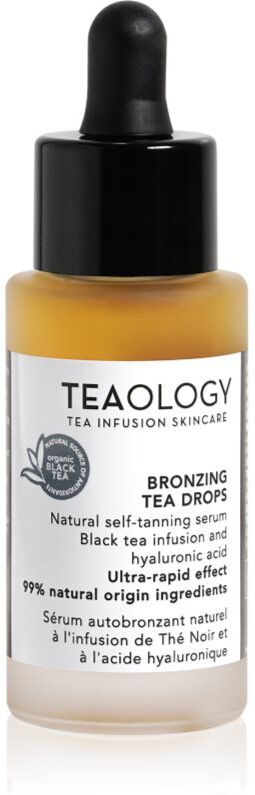
Teaology Bronzing Tea Drops self-tanning drops 30 mlTeaology Bronzing Tea Drops, 30 ml, Self-tanning Products for Women, Do you want to dazzle with beautifully tanned skin? But, at the same time, you do not want to wait for the weather to get better or for a holiday in a warmer climate? The Teaology Bronzing Tea Drops is a self-tan product that gives your face a perfect, even and natural-looking tan wherever you are, at any time of the year. It helps you achieve a gorgeous beach tan quickly and easily without exposing your skin to the sun. Characteristics: gives skin a touch of bronze can be used on the face and body hydrates and nourishes Ingredients: vegan product contains at least 90-99% ingredients of natural origin How to use: Apply to cleansed skin on your face and work in fully towards your neck and chest. After applying, wash your hands thoroughly.17,01 £*Shipping: 3,99 £Secure redirect to the provider
-
Evolve Beauty Sunless Glow Tanning DropsElevate the daily skincare ritual with Sunless Glow Tanning Drops, a customisable and certified organic solution for achieving a radiant complexion. These drops blend effortlessly into a preferred moisturiser or serum to deliver a buildable, streak-free glow without the need for UV exposure. Using a 100% natural formula of DHA and Erythrulose, this product ensures an even, gradual colour development that remains free from orange tones or unwanted scents.The advanced formula features a multi-active blend of Pentavitin, Maca Root, and Centella Asiatica to hydrate and energise the skin. Pentavitin provides deep hydration for up to 72 hours, while Maca Root Extract is shown to smooth the appearance of fine lines and enhance skin luminosity by up to 25%. Centella Asiatica works alongside these ingredients to calm and strengthen the skin barrier, leaving it soft and supple.Certified COSMOS Organic, vegan, and cruelty-free, these skin-kind drops are suitable for all skin types and have been patch tested on sensitive skin. Simply mix and apply for a sun-kissed complexion that looks healthy and feels deeply hydrated. Use these drops to achieve natural confidence and a beautifully radiant finish every day.Key BenefitsProvides a customizable, streak-free glow with a buildable formula using 100% natural DHA and Erythrulose for an even, natural color without orange tones - Delivers deep, 72-hour hydration and skin-soothing benefits through a multi-active blend of Pentavitin, Maca Root, and Centella Asiatica - Enhances skin luminosity by up to 25% and smooths fine lines while remaining suitable for all skin types, including sensitive skin, with a certified organic and vegan formulaIngredients:Aqua (Water), Dihydroxyacetone, Pentylene Glycol, Erythrulose, Glycerin, Centella Asiatica Leaf Extract, Sodium Hyaluronate, Aloe Barbadensis Leaf Juice Powder*, Lepidium Meyenii Root Extract**, Maltodextrin**, Saccharide Isomerate, Sodium Gluconate, Sodium Citrate, Citric Acid, Xanthan Gum, Caramel. *Ingredients From Organic Farming24,00 £*Shipping: 2,95 £Secure redirect to the provider
-
Uplift Essentials Sun Kissed Glow Tanning Serum Customizable Face & Body Bronzer Sun Kissed Glow Tanning Serum Customizable Face & Body BronzerAchieve a radiant, holidayready complexion with these highperformance Sunless Tanning Drops. Designed as a versatile natural tanner, this concentrated formula allows you to control your bronze by simply mixing a few drops into your favorite daily...57,97 $*Shipping: 0,00 $Secure redirect to the provider
-
Pestle & Mortar Glow Drops - Customisable Tanning Drops 30mlCustomise your tan with these tanning concentrated drops enriched with hyaluronic acid. The drops deliver a natural sun-kissed glow as dark or light as you would like your tan to go. The drops are formulated without alcohol, colour or fragrance so that you can achieve the tan you love without drying your skin out. Ingredients Aqua, Ascorbyl Glucoside, 3-O-Ethyl-L-Ascorbic Acid, Sodium Ascorbyl Phosphate, Pentylene Glycol, Glycerin, Lactobacillus/Pumpkin Fruit Ferment Filtrate, Ferulic Acid, Tamarindus indica Seed Polysaccharide, Xanthan Gum, Sodium Ascorbate, Sorbitol, Sodium Hydroxide, Citric Acid, Ethylhexylglycerin, Tetrasodium Iminodi- succinate, Sodium Hyaluronate Crosspolymer, Lecithin, Leuconostoc/Radish Root Ferment Filtrate, Hydroxyacetophenone, Sodium Benzoate, Sodium Chloride, Glucose, Potassium Sorbate, CI 75120 [Annatto], Phenoxyethanol. Oil Phase: Oenothera Biennis (Evening Primrose) Oil, Squalane, Linoleic Acid, Isopropyl Lauroyl Sarcosinate, Tocopherol, Linolenic Acid.35,00 £*Shipping: 0,00 £Secure redirect to the provider
-
What is the difference between standard enthalpy of formation, enthalpy of formation, and reaction enthalpy?
The standard enthalpy of formation is the enthalpy change that occurs when one mole of a compound is formed from its elements in their standard states. Enthalpy of formation is the enthalpy change that occurs when one mole of a compound is formed from its elements in their standard states, but it can be under non-standard conditions. Reaction enthalpy is the enthalpy change that occurs in a chemical reaction, which can be exothermic (heat is released) or endothermic (heat is absorbed). **
-
What is enthalpy?
Enthalpy is a thermodynamic property of a system that represents the total energy of the system, including its internal energy and the energy required to maintain constant pressure. It is often denoted as H and is expressed in units of joules. Enthalpy is important in understanding and analyzing processes such as chemical reactions and phase changes, as it provides a measure of the heat content of a system. In practical terms, enthalpy change is often used to quantify the heat absorbed or released during a process at constant pressure. **
-
What is the difference between bond enthalpy and formation enthalpy?
Bond enthalpy is the energy required to break a specific chemical bond in a molecule, while formation enthalpy is the energy change when one mole of a compound is formed from its elements in their standard states. Bond enthalpy is specific to a particular bond within a molecule, while formation enthalpy is a measure of the overall energy change in forming a compound. Bond enthalpy is typically measured in kilojoules per mole (kJ/mol), while formation enthalpy is also measured in kilojoules per mole (kJ/mol). **
-
What is Hess's law for standard formation enthalpy and combustion enthalpy?
Hess's law states that the total enthalpy change for a reaction is the same regardless of the number of steps taken to reach the final products. This principle can be applied to standard formation enthalpies and combustion enthalpies by using a series of known enthalpy changes to calculate the overall enthalpy change for a reaction. By manipulating and combining these known enthalpies, Hess's law allows us to determine the enthalpy change for reactions that may not be easily measured directly. **
Similar search terms for Enthalpy
-
Beautiful Skin Island Glow Easy Tanning Drops - Fair To Medium Charlotte Tilbury 1785 Beautiful Skin Island Glow Easy Tanning Drops Size:Darlings, discover my NEW! Beautiful Skin Island Glow Easy Tanning Drops, my FIRST-EVER SELF-TANNING INNOVATION! Infused with radiance-boosting, skin-plumping, hydrating skincare ingredients, plus clinically proven TAN-ENHANCING MOLECULES for that IBIZA-INSPIRED, lit-from-within ISLAND GLOW + FEELING! Reflecting how different skin tones behave in the sun, I have expertly formulated two shades so my tanning drops are suitable for all skin tones: Choose Fair/Medium if you have fairer skin with cool red undertones and tend to burn easily in the sun Choose38,00 £*Shipping: 2,95 £Secure redirect to the provider
-
Beautiful Skin Island Glow Easy Tanning Drops - Tan To Deep Charlotte Tilbury 1006 Beautiful Skin Island Glow Easy Tanning Drops Size:Darlings, discover my NEW! Beautiful Skin Island Glow Easy Tanning Drops, my FIRST-EVER SELF-TANNING INNOVATION! Infused with radiance-boosting, skin-plumping, hydrating skincare ingredients, plus clinically proven TAN-ENHANCING MOLECULES for that IBIZA-INSPIRED, lit-from-within ISLAND GLOW + FEELING! Reflecting how different skin tones behave in the sun, I have expertly formulated two shades so my tanning drops are suitable for all skin tones: Choose38,00 £*Shipping: 2,95 £Secure redirect to the provider
-
Uplift Essentials Natural Glow Tanning Drops Nourishing Brown Face & Body Tinting Serum Natural Glow Tanning Drops Nourishing Brown Face & Body Tinting SerumAchieve a customized, sunkissed radiance with these highperformance Tanning Drops. Designed as a versatile tinting serum, this formula allows you to control your tan by simply mixing a few drops into your favorite moisturizer. Whether you are...57,97 $*Shipping: 0,00 $Secure redirect to the provider
-
Paese Self Glow Light bronzing powder with smoothing effect 6 gPaese Self Glow Light, 6 g, Bronzers for Women, Do you want your face to look tan even on days when you’re not spending time outdoors or the sun is still hiding behind the clouds? The Paese Self Glow Light bronzer helps you achieve a tanned, sun-kissed look in the comfort of your own home instantly. It provides a subtle tint, making it easy to create a naturally bronzed look. This bronzer also allows you to highlight your facial contours and enhance the shape of your face. Be a bronze goddess whenever you feel like it. Characteristics: blends into your skin perfectly and leaves no streaks visibly smooths and softens the skin matte effect gently tones the face the product is also suitable for contouring How to use: For a tanned look, apply a small amount all over your face. To define the face and emphasise contours, apply along the sides of the forehead, under the cheekbones and to the bottom of the chin and the side of the nose.16,10 £*Shipping: 3,99 £Secure redirect to the provider
-
What is the difference between standard formation enthalpy and enthalpy change?
Standard formation enthalpy is the enthalpy change that occurs when one mole of a compound is formed from its elements in their standard states. It is a specific type of enthalpy change that is measured under standard conditions. Enthalpy change, on the other hand, is a more general term that refers to the overall change in enthalpy of a system during a chemical reaction or process, regardless of whether it involves formation of a compound or not. Enthalpy change can be positive (endothermic) or negative (exothermic), depending on whether energy is absorbed or released during the process. **
-
How to calculate the reaction enthalpy from the molar bond enthalpy?
To calculate the reaction enthalpy from the molar bond enthalpy, you need to consider the difference between the sum of the bond enthalpies of the reactants and the sum of the bond enthalpies of the products. First, calculate the total bond enthalpy of all the bonds broken in the reactants, and then calculate the total bond enthalpy of all the bonds formed in the products. The reaction enthalpy is then the difference between these two values, with the bond enthalpies of the products subtracted from the bond enthalpies of the reactants. This calculation allows you to determine whether a reaction is exothermic (releasing heat) or endothermic (absorbing heat). **
-
What is Hess's law equation for standard formation enthalpy and combustion enthalpy?
Hess's law states that the overall enthalpy change for a reaction is the same regardless of the number of steps taken to reach the final products. For standard formation enthalpy, the equation is: ∆Hf°(products) = ∑∆Hf°(products) - ∑∆Hf°(reactants). For combustion enthalpy, the equation is: ∆Hcomb° = ∑∆Hf°(products) - ∑∆Hf°(reactants). These equations allow us to calculate the enthalpy change of a reaction using the enthalpies of formation of the reactants and products. **
-
What is the difference between standard enthalpy of formation and enthalpy change?
The standard enthalpy of formation is the enthalpy change that occurs when one mole of a compound is formed from its elements in their standard states. It is a specific type of enthalpy change that is measured under standard conditions. On the other hand, enthalpy change refers to the overall change in enthalpy of a system during a chemical reaction or process, which can include various types of enthalpy changes such as enthalpy of reaction, enthalpy of combustion, or enthalpy of solution. In summary, standard enthalpy of formation is a specific type of enthalpy change that relates to the formation of a compound from its elements, while enthalpy change is a broader term that encompasses various types of enthalpy changes in a system. **
* All prices are inclusive of VAT and, if applicable, plus shipping costs. The offer information is based on the details provided by the respective shop and is updated through automated processes. Real-time updates do not occur, so deviations can occur in individual cases. ** Note: Parts of this content were created by AI.